Section 4 · Resources & History
The Church That Once Used This Domain
A factual history of First Baptist Church of Worland, Wyoming: 1906 tent beginnings, the Big Horn Avenue building, and the 2020 merger into CrossPoint.
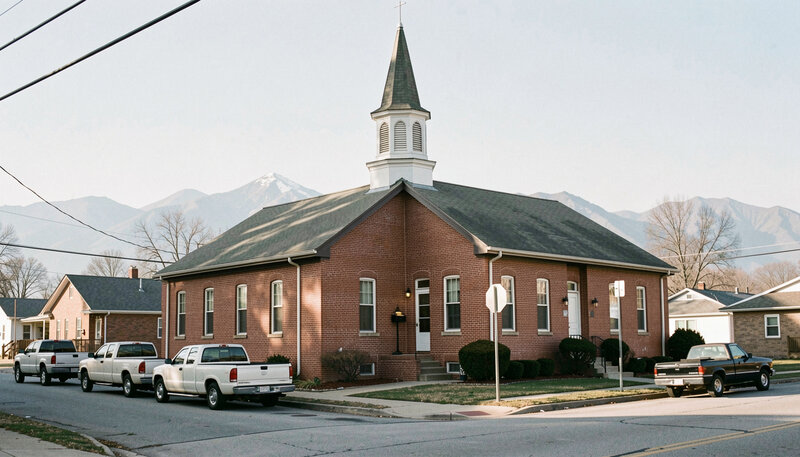
This address, fbcworland.org, was for more than a decade the website of First Baptist Church of Worland, a congregation in the Big Horn Basin of Wyoming that existed, under that name, from 1906 to 2020. That congregation no longer meets: it merged with another church in 2020, and the combined congregation worships today under a different name. The Fellowship Hall, the practical magazine now published here, is not that church and has no connection to it. This page keeps the record of what stood at this address, because a domain that carried a community's announcements for a decade has earned accurate memory rather than silence.
A congregation founded in 1906
First Baptist Church of Worland was organized on July 26, 1906, in a town that had itself been settled only a few years earlier along the Big Horn River. The church belonged from its founding to the American Baptist tradition, the Northern stream of Baptist life, and it served the ranchers, farmers and merchants who were building the town at the north end of the Big Horn Basin. Its first years were the classic small-town Baptist pattern: a small congregation meeting in borrowed and modest spaces, carrying on through drought years, wars and the slow growth that irrigated agriculture brought to the valley. The wider Baptist history of the state, and the two traditions that coexisted in it, is told on the companion page about Baptist churches in Wyoming.
Two buildings on two corners
The congregation's first permanent home stood at the corner of 7th and Culbertson in Worland. As the town and the church grew through the first half of the twentieth century, the members undertook the move that defined the church's next sixty years: a new building at 11th and Big Horn, with the first service held there on January 1, 1951. Mid-century church construction of this kind, brick, a modest sanctuary, classrooms wrapped around a fellowship space, was the standard Baptist expression of postwar confidence in the West, and the building at 1101 Big Horn Ave remained the congregation's home for the rest of its independent existence. Buildings and their loans are a quiet force in small-church life; the volunteer machinery that actually maintains such a building is the subject of this site's volunteer guide.
The 2003 turn to the Southern Baptist Convention
In September 2003, the congregation voted to affiliate with the Southern Baptist Convention, changing its denominational alignment after nearly a century in the American Baptist fold. The move reflected shifts happening across Wyoming and the mountain West, where the Southern Baptist presence, once marginal, had grown into a large network of congregations, and where small churches increasingly found training, camps and cooperative resources through that network's structures. Worland by then also had a Southern Baptist congregation, First Southern Baptist Church, and the two churches served the same town in parallel for another decade and a half, related by conviction, cooperation and, eventually, conversation.
This website's own history
The congregation went through the generations of web technology that a small church with an interested member could mount. A DotNetNuke site served the address in the late 2000s; a simpler PHP site followed around 2013; and a more modern Rails application ran in the years before the merger.
The student ministry app
The last distinctive thing published at this address was an iOS application, FBC Student Ministry Worland, listed in the App Store with sermons and podcast audio, a Bible reader, an events calendar and a prayer journal called Pursue. It served the congregation's youth ministry directly, putting the Sunday message and the Wednesday night schedule in the students' pockets. The app's App Store provider, listed even after the merger as Crosspoint Baptist Church (WY), tells the story of the handover in miniature: the tools outlived the name. The modern version of that question, whether a small church needs its own app at all, is weighed honestly in the ministry apps guide, and the ministry the app served is the kind of work documented across the student ministry guides.
The 2020 merger into CrossPoint Baptist Church
On February 7, 2020, First Baptist Church of Worland and First Southern Baptist Church of Worland merged into a single congregation, CrossPoint Baptist Church, which continues today and publishes its own site at crosspointbaptist.church. Two churches in a town of five thousand people, from traditions that had spent a century growing toward each other, concluded that their mission was better served together. Mergers of this kind are increasingly the story of small-town American religion, and the questions they settle, buildings, names, membership, are the terminal form of questions this site documents in their ordinary form, in building ministries and keeping volunteers for the long run.
What this site is, and is not
The Fellowship Hall is an independent editorial publication about church ministry practice, launched at a retired domain. It is not affiliated with, endorsed by, or connected to CrossPoint Baptist Church, to the former First Baptist Church of Worland, or to any Baptist organization; where those bodies appear in these pages, they are described as the historical third parties they are. Readers looking for the living congregation that carries the merged church's ministry will find it at its own address, crosspointbaptist.church. What remains here is what a magazine can honestly offer at this address: the history of the congregation and its state, and practical guides for the small churches, explained on the about page, that still do the work this one did for a hundred and fourteen years.