Section 1 · Student Ministry
Youth and Student Ministry
Guides for building and running a student ministry in a small church: weekly gatherings, leader teams, student leadership and a realistic calendar.
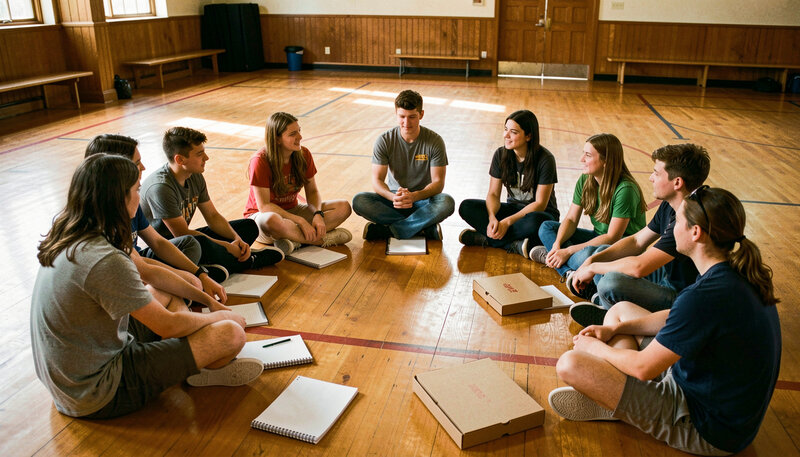
A student ministry is the part of a church that walks with young people from roughly sixth grade through the end of high school, and in a small church it is usually one volunteer, one borrowed room and one evening a week. The Fellowship Hall publishes this section for the people who keep that evening running: the volunteer who said yes before anyone explained the job, the bi-vocational pastor who supervises them, and the parents wondering what happens after the closing prayer. The guides here treat student ministry as a craft with repeatable parts, not a personality contest for the most energetic leader in the building.
What a student ministry actually covers
The label is broader than the Wednesday night meeting most people picture. A working student ministry covers a weekly gathering where teenagers eat, play and hear a short teaching; a rhythm of small group conversation where the real questions surface; a handful of events across the year such as retreats, service days and summer camps; and a quiet layer of relationships, text messages and hallway conversations that no calendar captures. In a small church all of that may fit inside one leader and eight students, and that scale is a strength rather than an embarrassment. Eight known names beat a gymnasium of strangers, because ministry to teenagers runs on being known, not on production values.
The section also covers the boundary questions that come with the territory: what student ministry is not. It is not childcare, since teenagers sniff out babysitting within one evening. It is not a school classroom, since students already sit through five days of instruction. It is a third space, somewhere between home and school, where adults who are not parents and not teachers listen to students on the students' own terms.
Who leads student ministry in a small church
Small church student ministry is almost always led by a volunteer or a bi-vocational pastor, and the guides in this section are written to that reality. The leader does not need a seminary degree to run a strong ministry. They need a clear vision stated in one sentence, a team of two or three adults so the ministry survives a sick week, and the trust of parents, which is earned through communication rather than demanded. Screening matters as soon as adults serve minors: background checks, two-adult rules and open doors are the floor, not gold plating. The guide on recruiting, screening and keeping volunteers walks through that machinery in detail, because a student ministry is only as durable as the adults behind it.
The three working guides in this section
Three guides carry the section, and each answers one question that either precedes a ministry or keeps it alive. How to Build a Youth Ministry gives the ordered steps for starting from nothing: vision, leaders, a weekly gathering, parent trust and a calendar that will not burn anyone out. Youth Group Gatherings That Work takes the weekly meeting apart, from the first welcome to the last ride home, and shows the arc of an evening that students return to by choice. Raising Student Leaders turns the ministry on its head in the best way: how to spot teenagers ready for real responsibility, hand it over safely, and let students lead peers while adults supervise from a step back.
What a realistic first year looks like
The first year of a small church student ministry has a shape, and knowing it in advance saves a leader from the November discouragement that kills many starts. The first weeks run on novelty: students come because it is new. By late autumn the novelty is gone and attendance dips, and the leaders who survive are the ones who keep the evening warm, keep texting the students personally and keep the teaching short. Winter rewards consistency, spring brings the retreat or service project that bonds the group, and summer resets everything. A ministry that plans for that rhythm, rather than panicking at each dip, is still standing in year two.
Where student ministry meets the rest of the church
None of this happens in a corner. The gathering feeds and is fed by the study habits of the group, which is why the Bible study and small group guides sit next to this section: the same teenagers who dodge a lecture will argue honestly around a circle of folding chairs. The events that mark the year draw on the planning and safety basics in church events and activities. And when the week feels heavy, the resources section surveys the apps and tools that carry communication, planning and teaching without adding staff.
Start where you stand
If the ministry does not exist yet, begin with the build guide and its one-sentence vision exercise. If it exists but sags, read the gatherings guide and rebuild the evening around the arc of welcome, play, teaching and honest talk. If it runs but revolves around one adult, the student leaders guide is the next move. Each guide ends with steps that can be taken this week, in a small church, with the people already in the building.
Guides in this section
Student Ministry
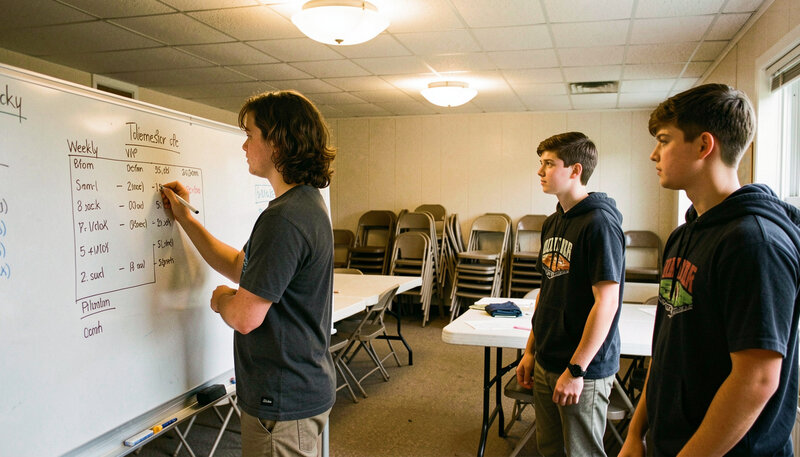
How to Build a Youth Ministry
Vision, leaders, a weekly night, parent trust, a calendar that survives spring.

Student Ministry
Youth Group Gatherings That Work
Welcome, game, short talk, circle talk, food: the arc of a night that works.
Student Ministry
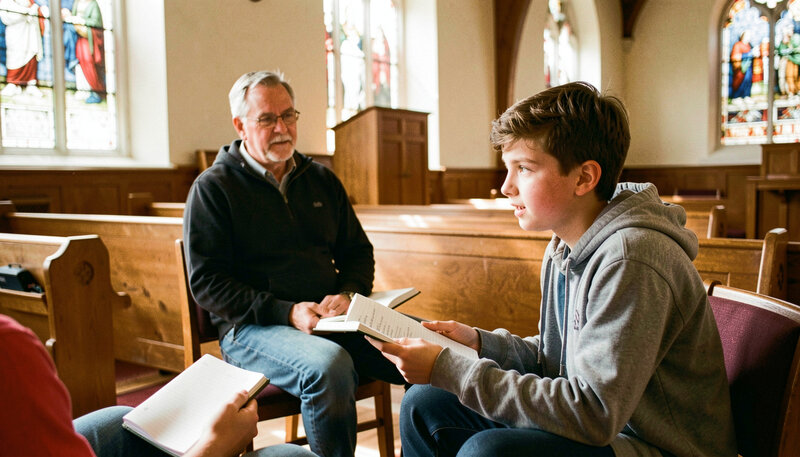
Raising Student Leaders
Spot readiness, hand over real responsibility, mentor, then let them lead peers.