Section 1 · Student Ministry
Raising Student Leaders
How a youth ministry grows student leaders: spotting readiness, giving real responsibility, mentoring and letting teenagers lead peers safely.
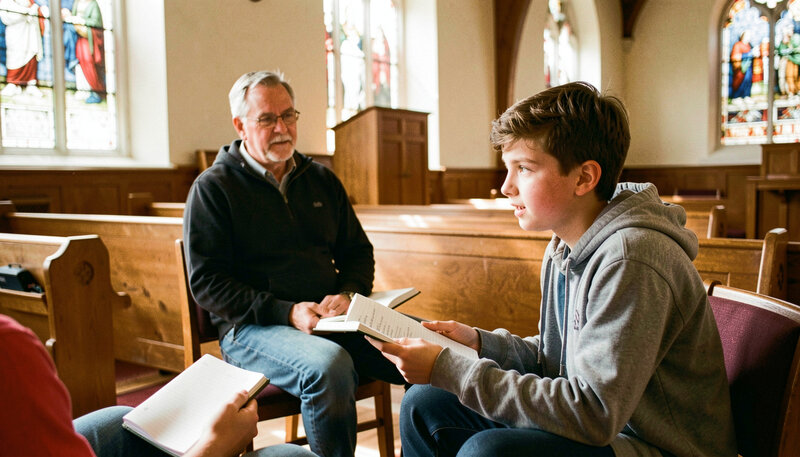
Every healthy student ministry eventually faces the same realization: the goal is not to run a great program for teenagers, but to raise teenagers who can carry ministry themselves. Handing real responsibility to students is the difference between a group that evaporates when the leader leaves and one that keeps producing adults who serve. This guide covers the full progression: spotting readiness, training with a real task, mentoring alongside and releasing students to lead peers while adults supervise from a step back.
What readiness actually looks like
Readiness for leadership in a teenager rarely looks like polish. It looks like consistency: the student who shows up early without being asked, who remembers the new kid's name, who asks what needs carrying. Spiritual readiness shows up as honest questions rather than perfect answers, and social readiness shows up as the student others naturally follow in a game before any adult assigns them a role. Watch for the quiet ones too, because a student who texts a hurting friend at midnight has a shepherd's instinct that a louder personality may lack. Age matters less than track record; a steady fifteen-year-old often outleads an unreliable senior.
Start with a task that is real but survivable
The first leadership jobs should be genuinely useful and genuinely safe to fumble. Running the game at the weekly gathering, greeting at the door, running sound or slides, co-leading a prayer time or heading up the food cleanup all qualify. The test is simple: if the student does it badly, the evening survives and nobody is hurt; if the student does it well, the evening is visibly better. Announce the handover so the group knows the student owns the task, then resist taking it back at the first wobble. A leader who redoes a student's work teaches the whole room that the titles were decorative.
Train in short loops, not long lectures
Student leaders are trained the way athletes are trained: brief instruction, then a rep, then specific feedback, then another rep. Before the student runs the game, walk through it in two minutes and name one thing to watch, such as pacing or including the kid on the edge. Afterward, spend three minutes on what worked and one thing to adjust next time. Keep the feedback proportioned generously, because teenagers hear criticism at twice its volume. Over a season these loops compound into genuine skill, and the student's confidence is built on demonstrated competence rather than applause.
How do you let students teach their peers
The highest rung is a student leading part of the ministry's actual content: a question circle, a short devotional, a stretch of the gathering. Safety and quality both come from preparation rather than from hovering. The adult and student meet for ten minutes beforehand to sketch the plan, agree on the one idea it carries and anticipate the awkward moments. The adult stays in the room and within earshot, which keeps the two-adult floor intact and lets the leader step in only if the circle stalls. Peer teaching reaches students the adults cannot, because a sixteen-year-old explaining why a habit matters lands differently than a forty-year-old saying the same words. The question craft these young leaders need is the same craft described for adults in the study ideas guide.
Mentoring that survives a busy semester
Mentoring a student leader is less a scheduled program than a durable habit: a monthly conversation with a notebook, remembering their games and their family situations, and telling them specifically what God seems to be doing in their leading. Small church life makes this easier, since the mentor probably already drives past the student's house. Keep expectations explicit about the commitment and its length, a school year is a natural unit, and celebrate the ending rather than letting it dissolve. A student who has been mentored well almost always turns around and mentors someone younger, which is how a ministry becomes self-sustaining.
What could go wrong and how adults stay responsible
Releasing leaders is not abandoning supervision. The adult team keeps the responsibilities that never transfer: safety calls, screening standards, conflict between students that involves hurt, and anything a parent would need to hear about. A student leader who misuses the role, playing favorites or grandstanding, gets a private conversation and a reset, not a public demotion. Boundaries stay the same as for adults: no one-on-one isolated situations, communication with minors goes through channels parents know about, and the two-adult rule holds at every event. The machinery behind these standards is documented in the volunteer guide and applies to student leaders in training just as it does to adults.
The payoff for a small church
A small church that raises student leaders gains more than help on Wednesday nights. It gains teenagers who stay connected to the congregation after graduation, a pipeline of future volunteers and staff, and a witness to the whole church that young people are contributors now rather than the audience of tomorrow. The students who once ran the game come back from college ready to run a circle in the small group ministry, and some eventually lead whole ministries of their own. That arc, from carried to carrying, is the point of the entire student ministry section.